

Introduction
Business interest is a broad term. It covers any activity where you seek financial gain. This includes stocks, real estate, or a side hustle. Understanding your interests helps you focus.
Defining your “why” is the foundational step in this journey. Are you looking for immediate income, long-term wealth accumulation, or perhaps personal fulfillment? Clarity of purpose prevents you from drifting with market trends. Without a solid internal compass, it is easy to chase shiny objects that promise quick riches but deliver little substance.
The modern economy offers unprecedented access to various investment vehicles. However, access does not equate to suitability. You must filter opportunities through the lens of your specific financial situation and risk tolerance to avoid unnecessary exposure.
Disclaimer
The information provided is for educational purposes only. It does not constitute financial advice. Always consult a qualified professional before making decisions.
It is crucial to recognize the limitations of generic online content. Every individual’s financial landscape is unique, shaped by factors such as tax brackets, existing debt, and family obligations. What works for a tech entrepreneur might be disastrous for a retiree living on a fixed income.
Furthermore, regulations regarding investments vary significantly across different jurisdictions. Relying solely on unverified sources can lead to compliance issues or misinformed strategies. Professional advisors provide localized, personalized guidance that accounts for your complete financial picture.
Key Takeaways
- Define your core motivations.
- Diversify to manage risk.
- Align interests with long-term goals.
These principles serve as the pillars of a resilient financial strategy. They are not merely suggestions but fundamental laws of navigating complex markets. Ignoring them often results in volatility and stress.
Additionally, these takeaways should be revisited periodically. As you age or as economic conditions shift, your definition of success may change. The key is to maintain a dynamic relationship with your goals rather than treating them as rigid, unchangeable rules.
Table of Contents
- Defining Business Interests
- Risk Management Strategies
- Goal Alignment
- Actionable Insights
- FAQ Section
- Conclusion
A well-structured table of contents acts as a roadmap for the reader. It allows for quick navigation and helps set expectations for the depth of each section. In longer-form content, this is especially vital to prevent reader fatigue.
Think of it as the table of contents in a book; it provides a high-level overview of the narrative arc. Users can jump directly to the section most relevant to their current query, enhancing the overall user experience and reducing bounce rates.
Defining Business Interests
Business interests are not static. They evolve as you gain experience. You must regularly review your portfolio.
Focus on sectors you understand. Passion drives persistence. This is vital for long-term success. If you are indifferent to the industry, the inevitable downturns will cause you to abandon ship prematurely. True interest acts as the fuel that keeps you going when the going gets tough.
Moreover, understanding the mechanics of a business is more valuable than speculating on its hype. Study the supply chain, the customer acquisition cost, and the competitive landscape. This deep knowledge transforms you from a gambler into a calculated investor who can weather economic storms.
Risk Management Strategies
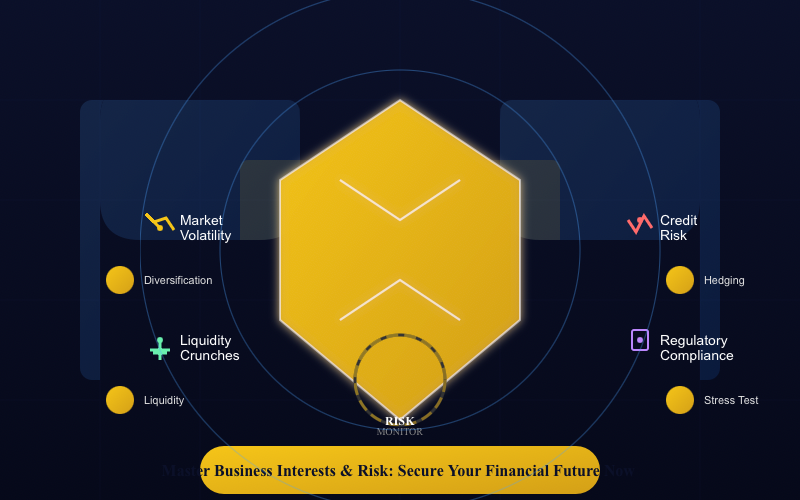
Never put all your eggs in one basket. Diversification is key. It protects you from market volatility.
A common mistake is to diversify only across asset classes (stocks, bonds, crypto) but ignore industry-specific risks. True diversification means looking at geographic stability, political climates, and correlation coefficients. You want assets that do not move in perfect sync, ensuring that a crash in one sector does not cascade into a total portfolio failure.
Set clear stop-loss limits. This protects your capital. Emotional decisions lead to losses. The human brain is wired to hold onto losing investments in the hope of a rebound, a phenomenon known as loss aversion. Predefined limits remove the emotion from the equation, enforcing discipline.
Advanced Risk Considerations
Beyond basic diversification, sophisticated investors utilize hedging strategies. This can involve options contracts or inverse ETFs designed to offset potential losses in a primary position. While these tools are complex, they offer a layer of protection in highly volatile markets.
Another critical aspect is liquidity management. Ensuring you have access to cash reserves prevents the need to sell depreciated assets at the worst possible time. An emergency fund dedicated to your business endeavors can mean the difference between weathering a temporary storm and permanent failure.
Goal Alignment
Your business interests must match your life goals. Ask yourself what true success means.
Financial freedom is a common aim. Ensure your strategies support this vision. Adjust your plans as needed. For some, freedom might mean retiring at 40, while for others, it might mean funding a child’s education without debt. The end state dictates the path you take.
It is also important to align your temporal goals. If you need capital within the next year, high-risk, high-reward ventures are inappropriate. Conversely, if you have a 20-year horizon, you can afford to be more aggressive and invest in growth stocks that prioritize reinvestment over dividends.
The Psychology of Goal Setting
Goals provide psychological structure. They transform abstract desires into actionable metrics. Using the SMART framework (Specific, Measurable, Achievable, Relevant, Time-bound) helps bridge the gap between dreaming and doing. Without this structure, it is easy to become overwhelmed or lose focus.
Regular reflection on your goals ensures that your business activities remain congruent with your personal values. If you find yourself sacrificing health or family time for the sake of profit, it is a sign that your alignment is off and requires immediate adjustment.
Actionable Insights
Start small. Test your ideas in the real world. Learn from every outcome.
The concept of a Minimum Viable Product (MVP) is not just for startups; it applies to personal investing. Allocate a small portion of your capital to test a hypothesis. This could be a new stock sector, a rental property in a different city, or a freelance gig. The goal is to gather data without risking your financial stability.
Track your progress meticulously. Use data to refine your approach. Stay adaptable. Maintain a spreadsheet or use financial software to monitor key performance indicators (KPIs). Data does not lie; it reveals patterns that intuition often misses. When the data shows a consistent trend, you have discovered a valuable insight.
The Iteration Process
Business is a cycle of hypothesis and experimentation. Do not view failures as setbacks but as tuition paid for valuable lessons. Each iteration should refine your methodology, making you more efficient and effective over time. This iterative process is what separates successful long-term investors from those who burn out quickly.
FAQ Section
What is a business interest?
It is any venture pursued for profit. It requires time and resource investment.
How do I start?
Begin with research. Identify a niche. Build a simple business plan.
Why is diversification important?
It reduces the impact of a single failure. It creates stability in your income.
Expanding on the FAQ, potential investors often confuse interest with hobby. A business interest must have a clear path to monetization. A hobby becomes a business interest when you implement systems to generate revenue consistently. Furthermore, understanding the legal structure (LLC, Corporation, Sole Proprietorship) is essential before scaling.
Another frequently asked question concerns the time commitment required. Unlike a job, business interests often demand irregular hours, especially in the startup phase. Passion is what sustains you through these long nights and weekends where there is no immediate payoff.
Market Analysis and Trends
To truly define your interests, you must engage with the market. Read industry reports, follow thought leaders, and analyze consumer behavior. The market is a living entity that breathes and changes. Those who listen to its whispers rather than ignore them will find greater success.
Currently, sectors such as renewable energy, artificial intelligence, and sustainable agriculture are showing significant promise. However, trends are fickle. Do not jump on a bandwagon simply because it is popular. Analyze whether the trend has legs or if it is a passing fad. Look for durable changes in infrastructure or consumer habits rather than temporary shifts in sentiment.
Conclusion
Business interests require attention. Stay informed and proactive. This ensures long-term viability.
In the end, the journey is as important as the destination. The skills you develop—analytical thinking, resilience, and strategic planning—will benefit you far beyond the realm of finance. Treat your business interests as a marathon, not a sprint, and cultivate the discipline required to finish strong. Continuous learning is the antidote to obsolescence.
Staying vigilant also means staying humble. The market will humble even the most confident investor. Embrace this humbling as a learning opportunity. Adapt, learn, and move forward with greater wisdom. This mindset is the true key to sustaining interest and profitability over a lifetime.